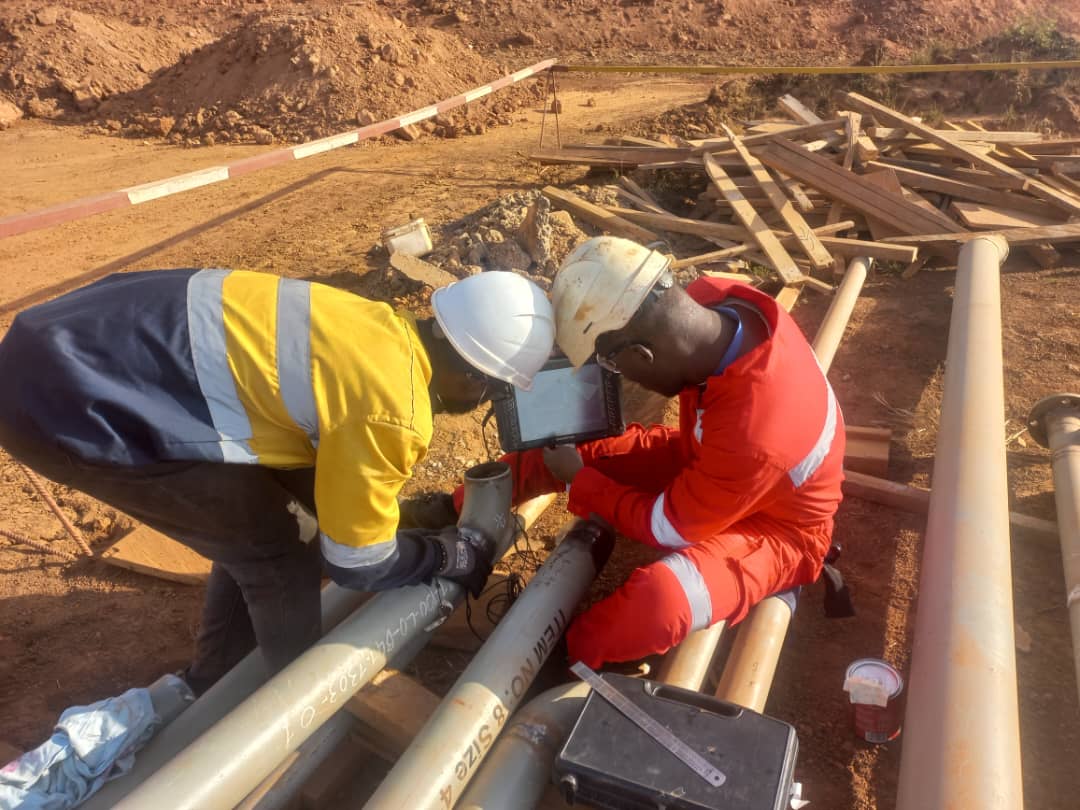
VT
Visual Testing
Primary inspection method for surface conditions, weld geometry and external defects.
Service · NDT
Conventional and advanced inspection methods deployed by certified technicians — detecting defects without disrupting the asset.
Conventional NDT
Workhorses of asset inspection — fast, proven and standards-aligned for routine weld and component verification.
Primary inspection method for surface conditions, weld geometry and external defects.
Detects surface-breaking defects on non-porous metals via liquid penetrant capillary action.
Identifies surface and near-surface discontinuities in ferromagnetic materials.
Electromagnetic technique for conductive material inspection and coating thickness.
X-ray and gamma-ray imaging to detect internal volumetric defects in welds and castings.
High-frequency sound waves to measure thickness and detect internal flaws.
Advanced NDT
When standard methods aren't enough — phased arrays, pulse eddy currents and long-range guided waves take over.
Electronically swept and focused ultrasonic beams to characterize complex geometries and welds.
Single-point screening of long pipe runs for corrosion under insulation and remote locations.
Thickness measurement and corrosion mapping through coatings and insulation without contact.
Inspection of ferromagnetic tubing — boilers, heat exchangers and downhole assets.
Ready when you are
Get a tailored proposal from our engineering team — typically within 24 working hours.